Plants for Birds
Create beneficial habitat for birds, pollinators, and other wildlife by incorporating native plants into your home landscape.
Grow Something that Gives Back
Whether you have a spacious backyard, a small garden, or just a few containers on a patio or balcony, you can help create a welcoming space for birds and other wildlife.
One of the best ways to support wildlife is by growing native plants. From sprawling oaks and berry-producing shrubs to cheerful wildflowers and hardy native grasses, native plants provide food, shelter, and places to raise young. Importantly, native plants also support the life cycles of insects and other arthropods, which many birds rely upon for food and which form the foundation of a healthy ecosystem.
You don’t need to be an experienced gardener or transform your entire outdoor space to make a difference. Even a few thoughtfully chosen native plants can help support wildlife where you live.
Why Native Plants Matter
Native plants have evolved alongside the birds, insects, and other wildlife of our region over many millennia. The timing of their blooms and seed production, along with the development of the insects they support, helps meet the needs of birds throughout the year, from migration to breeding to overwintering.
Native Food for Birds
Native trees, shrubs, grasses, and wildflowers provide fruits, seeds, nuts, and nectar that sustain birds throughout the year. Choosing plants that produce food at different times can support both resident and migratory species. For example, spring flowers provide nectar for migrating hummingbirds, summer berries feed nesting birds and their fledglings, and native grasses produce seeds in fall that sustain sparrows and other seed-eating birds through winter.
Insects: An Essential Part of the Food Web
Many birds depend on insects, especially when raising their young. Native plants support insects such as caterpillars and other larvae, which are important foods for many nesting songbirds.
Research by entomologist Douglas Tallamy illustrates just how important native plants are to birds. In the eastern United States, native oaks support more than 500 species of moth and butterfly caterpillars, while nonnative trees such as ginkgo often support fewer than 10. When a pair of Carolina Chickadees needs to find an estimated 6,000 to 9,000 caterpillars to raise a single nest of chicks, an oak tree can make all the difference in the survival of the nestlings!
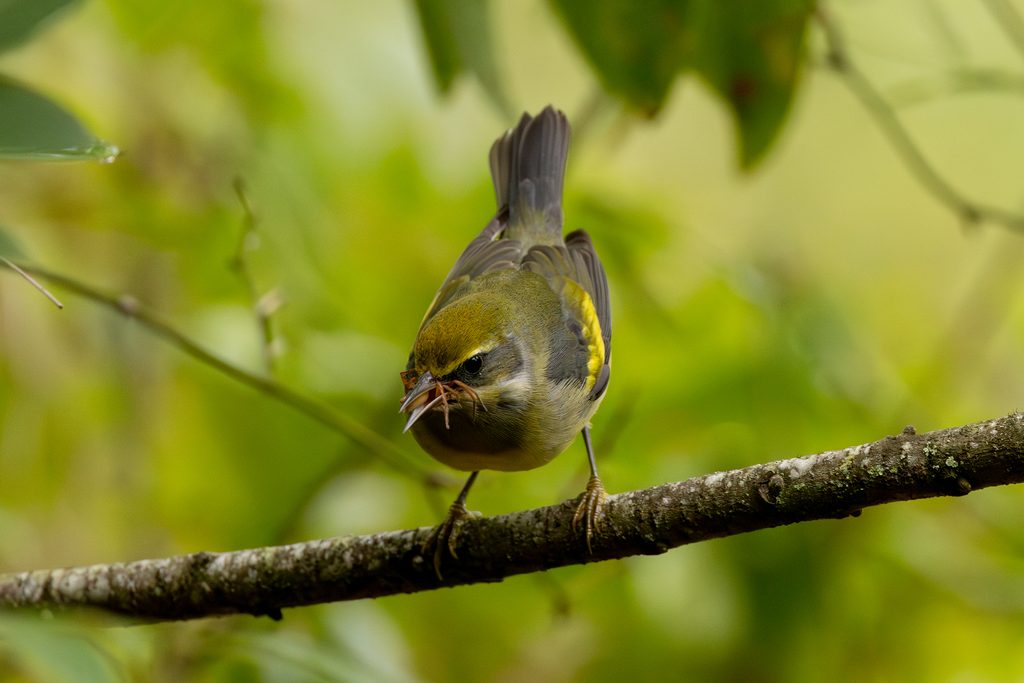
Golden-winged warbler hunting insects in a native oak. Photo by Angel Poe.
Shelter and Nesting Habitat
Trees, shrubs, and grasses give birds places to rest, escape predators, find protection from the weather, and build nests. Including plants of different heights and structures can create habitat for a greater variety of birds. Wildflowers are lovely, but shrubs, trees, and grasses offer important cover and nesting locations that flowering plants alone may not provide. Consider using native plant cuttings and fallen tree limbs to create a brush pile where birds can find shelter, forage for insects, and escape predators. When it’s safe to do so, leave standing dead trees (called snags) to provide nesting opportunities for woodpeckers, chickadees, and other cavity-nesting birds.
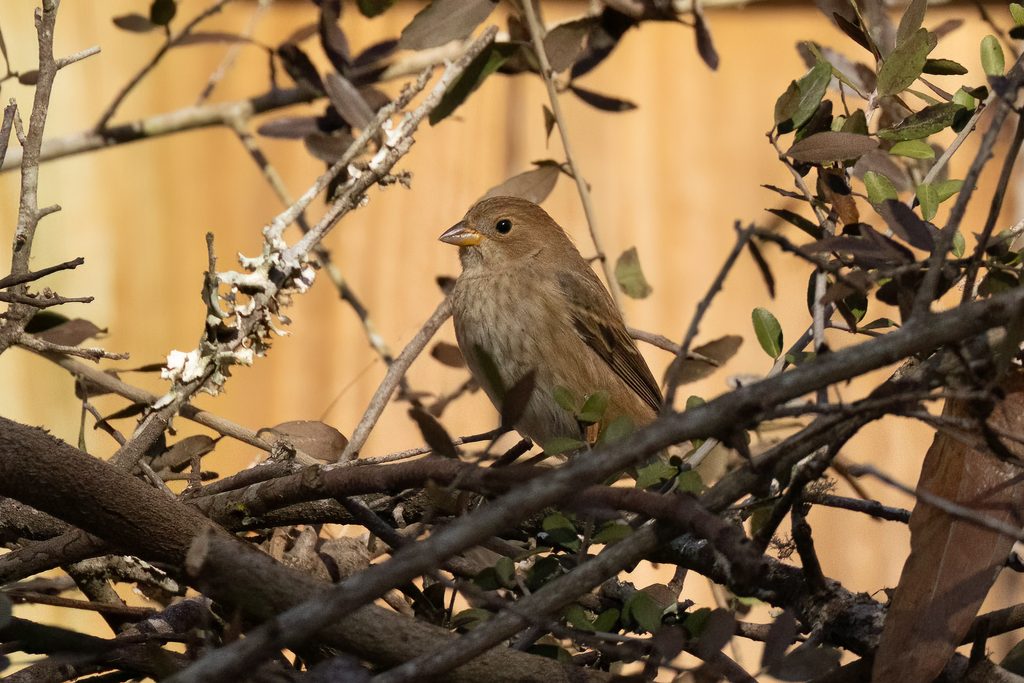
A female Indigo Bunting perches atop a brush pile made from mostly oak and holly limbs that fell after a recent storm. Photo by Angel Poe.
The Right Plant in the Right Place
Native plants are adapted to our region’s climate and growing conditions. The key to choosing the right plants for your space is to make note of the amount of sun and moisture for the area, as well as the soil type. When planted and established in locations that meet their needs, native plants can often thrive with minimal supplemental watering and with no need for fertilizers or pesticides.
Find the Right Native Plants for Your Location
Interest in native landscaping is flourishing across the country, and there are more resources than ever to help you get started. Here are some of our favorites for finding native plants suited to Northwest Florida.
Native Plant Company’s Guides for Native Plant Gardening in Northwest Florida
An excellent collection of native plant resources tailored to Northwest Florida. In addition to extensive plant lists, you’ll find practical guides on assessing your growing conditions, selecting and caring for native plants, and choosing plants that support birds, butterflies, and other pollinators.
Florida Native Plant Society – Plant Search
Search an extensive database of Florida native plants by county, sunlight, soil conditions, moisture requirements, and wildlife benefits. Individual plant profiles provide additional information to help you choose suitable species.
University of Florida/IFAS Gardening Solutions: Native Plants
Explore an extensive collection of articles and plant profiles. This site addresses a wide range of Florida’s native plants, their specific ecological benefits, and information on growing conditions.
Where to Buy Native Plants in Northwest Florida
Native Plant Company | Milton, Florida
Native Plant Company grows and sells a wide variety of native plants adapted to the climate and soils of Northwest Florida. Many species they grow are wild ecotypes with local genetics.
Sandhills Native Nursery | Fountain, Florida
Sandhills Native Nursery propagates and maintains a large inventory of plants native to north Florida. They also offer both residential and commercial landscaping design services.
Crazy Native Plant Lady | Milton, Florida
Crazy Native Plant Lady is a backyard grower offering a selection of trees, wildflowers, shrubs, vines, groundcovers, and ferns. Plants available may vary by season.
Florida Native Landscapes | Pensacola, Florida
Florida Native Landscapes is a native plant-focused and ecologically minded landscape design firm offering consultations, full landscape design services, and post-installation maintenance.
A Word of Caution About Wildflower Seed Mixes
Be careful when purchasing commercial wildflower seed mixes, especially online, at big box stores, and local nonnative plant nurseries. Some mixes are labeled as “native,” “Southeast,” or “Florida” wildflowers, yet contain seeds of plants that aren’t native to Florida or even North America. Sometimes these mixes include highly aggressive or invasive nonnative species. Always check the species list of any seed mixes before purchasing, or buy seeds from a trusted native plant grower.
Sources and Further Reading
- National Audubon Society. Why Native Plants Matter
- Tallamy, Douglas W. (2020). Nature’s Best Hope: A New Approach to Conservation That Starts in Your Yard. Timber Press.
- Tallamy, D. W., & Shropshire, K. J. (2009). Ranking lepidopteran use of native versus introduced plants. Conservation Biology, 23(4), 941–947.
- University Press of Florida, Native Plant Gardening Reading List